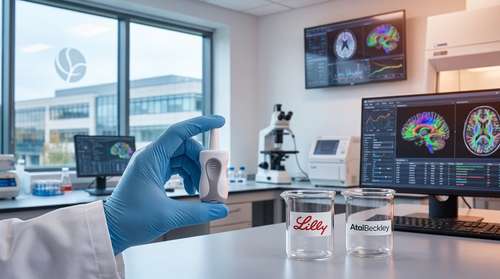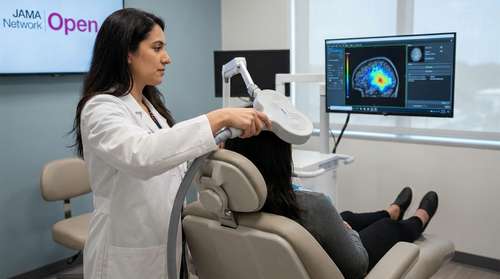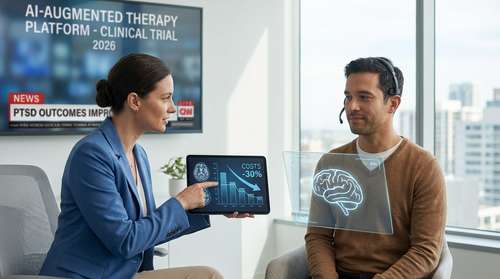
On April 11, 2026, the psychiatric community witnessed a major paradigm shift with the publication of a landmark clinical trial demonstrating the unprecedented efficacy of AI mental health therapy. The rigorous 12-month study revealed that machine learning models designed to map out individual patient histories significantly outperform standard, one-size-fits-all clinical approaches. By analyzing everything from language patterns to physiological markers, these adaptive systems have sparked a genuine depression treatment breakthrough. For healthcare networks and patients alike, the results are staggering: a 30% reduction in overall treatment costs and a 25% spike in patient engagement, effectively reshaping how we approach complex mood and trauma disorders.
The Machine Learning Edge in Personalized Psychiatry 2026
Traditional clinical models often rely on trial and error to find the right therapeutic modality or medication. However, the latest findings solidify the arrival of personalized psychiatry 2026, an era where algorithmic precision replaces guesswork. By integrating machine learning in clinical therapy, practitioners can now digest vast amounts of patient data—including trauma timelines, previously failed interventions, and biometric feedback from wearable devices like sleep and heart rate trackers.
The trial tracked thousands of participants over a full year, utilizing an advanced AI system to constantly calibrate their care. When a patient exhibited linguistic markers of a depressive episode or a spike in resting heart rate indicating anxiety, the algorithm flagged the shift. It then adjusted the therapeutic protocol immediately, recommending specific cognitive behavioral techniques or notifying a human clinician to intervene. This proactive loop is largely responsible for the 25% increase in patient engagement. Instead of waiting weeks for an appointment to report symptoms, individuals received dynamic, daily support that kept them actively participating in their own recovery.
A Genuine Depression Treatment Breakthrough
Historically, financial strain and logistical hurdles have been the two most formidable barriers to consistent psychiatric support. The 30% drop in clinical overhead reported in the study proves that affordable mental healthcare is no longer just a talking point; it is an actionable reality.
How does the technology cut expenses so drastically? The AI framework acts as a highly specialized triage and support system. It handles between-session symptom tracking, psychoeducation, and routine coping exercises. This means that when a patient actually sits down with a licensed human therapist, the session is laser-focused on deep clinical work rather than basic symptom reporting.
Redefining the Therapist-Patient Dynamic
Crucially, this AI mental health therapy does not eliminate the clinician. Instead, it elevates them. Key financial and operational benefits observed in the trial include:
- Optimized Clinical Hours: Human therapists spend less time on routine questionnaires and more time addressing core psychological issues.
- Reduced Emergency Interventions: Early algorithmic detection of depressive spirals prevents costly hospitalizations or crisis center visits.
- Scalable Support: Clinics can safely increase their patient load without compromising the quality of individual care.
The algorithm provides an ever-present safety net during late-night hours when traditional clinics are closed, ensuring vulnerable individuals are never entirely isolated with their symptoms.
Revolutionizing AI-Driven PTSD Care
Perhaps the most sensitive area of psychiatric treatment is trauma recovery. Post-Traumatic Stress Disorder requires a delicate, highly structured approach, as improper exposure can easily re-traumatize a patient. The trial's success in AI-driven PTSD care marks a pivotal step forward for trauma survivors.
Trauma recovery is notoriously non-linear. A patient might make significant progress over several months, only to face a sudden regression triggered by an unexpected environmental stressor. The personalized models evaluated the unique triggers and thresholds of each participant with remarkable precision. By analyzing biometrics such as sudden heart rate variability shifts combined with fragmented sleep patterns, the software could predict a potential PTSD flare-up before the patient fully recognized it.
Furthermore, patients with PTSD often struggle with avoidance behaviors, skipping appointments when anxiety peaks. The AI companion mitigated this by checking in through text-based conversational interfaces, offering micro-interventions that felt less intimidating than a full 60-minute therapy session.
Shaping the Future of Mental Health Technology
As we parse the implications of this 12-month clinical trial, it becomes evident that the future of mental health technology relies on synthesis rather than replacement. Machine learning handles the data-heavy lifting, continuous monitoring, and resource allocation. Human professionals provide the therapeutic alliance, nuanced empathy, and clinical oversight that algorithms simply cannot replicate.
The April 2026 breakthrough proves that we possess the tools to dramatically lower the financial barriers to psychiatric support. By committing to individualized, algorithm-assisted care plans, the medical community is unlocking a more accessible, responsive, and ultimately more effective standard of healing.