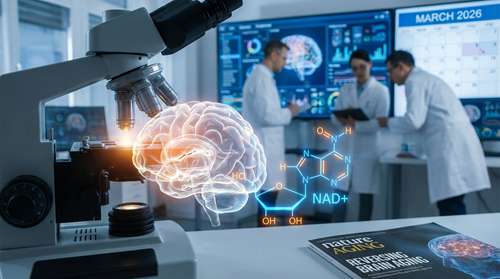
A sweeping expert review published this week has fundamentally shifted how the medical community views cognitive decline. Released on March 24, 2026, the landmark Nature Aging study March 2026 edition brought together more than 25 leading international scientists and clinicians to evaluate the therapeutic potential of nicotinamide adenine dinucleotide. Widely known as NAD+, this vital molecule is now being recognized as the ultimate fuel regulator for the human body, offering a promising pathway toward reversing brain aging 2026 and protecting against debilitating neurodegenerative conditions.
The Brain's Master Fuel Regulator
Led by researchers from the University of Oslo and Akershus University Hospital, the global consortium synthesized years of laboratory data and human clinical trials to map exactly how NAD+ dictates human aging. At a fundamental biological level, NAD+ governs how cells produce energy, repair damaged DNA, and maintain structural integrity under stress.
The human brain is particularly vulnerable to metabolic changes. Despite making up only a small fraction of overall body weight, the brain consumes roughly a fifth of the body's total energy supply. When we age, systemic NAD+ levels experience a precipitous drop. This metabolic depletion triggers a cascading effect, strongly linked to memory loss, diminished muscle strength, and the onset of severe neurological diseases.
For decades, the medical community has searched for methods focused on preventing Alzheimer's naturally, often emphasizing dietary interventions, cardiovascular health, and cognitive exercises. The new consensus indicates that addressing this underlying cellular energy crisis directly could act as a potent biological shield against both Alzheimer's and Parkinson's disease,.
Clinical Progress: Moving Beyond Animal Models
The prospect of systemic cellular rejuvenation represents one of the most highly anticipated longevity science breakthroughs of our time. Yet, translating dramatic anti-aging results from laboratory mice into viable human therapies requires overcoming complex metabolic hurdles.
Fine-tuning NAD+ metabolism holds promise for delaying age-related health decline as well as diseases such as premature ageing diseases, noted Dr. Jianying Zhang, one of the lead authors of the review. But to truly unlock its potential, we need to better understand the right doses, long-term safety, and inter-individual variability in response to NAD+ augmentation strategies.
The inter-individual variability Dr. Zhang highlights is a critical frontier for clinical practitioners. Recent data shows that genetics, chronological age, and baseline metabolic stress dictate how effectively a patient responds to NAD+ therapies. For instance, optimal NAD+ synthesis requires adequate magnesium levels and strict circadian alignment. Individuals who maintain consistent sleep schedules, stay hydrated, and practice active recovery routines often exhibit significantly better cellular uptake and faster cognitive improvements.
The Efficacy of Healthy Aging Supplements NR NMN
To bridge the gap between declining natural levels and optimal cellular function, researchers are heavily scrutinizing precursor molecules. The international review carefully evaluated clinical trials testing specific vitamin-like compounds, primarily nicotinamide riboside (NR) and nicotinamide mononucleotide (NMN). These healthy aging supplements NR NMN serve as direct biological building blocks, allowing the body to manufacture its own NAD+ internally and bypass certain metabolic bottlenecks.
Early clinical trials investigating these oral precursors have reported highly encouraging outcomes. Participants in specialized studies demonstrated measurable improvements in working memory, physical mobility, and overall metabolic markers,. For older demographics, maximizing NAD+ benefits for seniors means potentially regaining the physical stamina and cognitive sharpness characteristic of a much younger biological age.
Cutting Through the Commercial Supplement Noise
Despite the immense clinical promise, the researchers issued a firm note of caution regarding the booming commercial marketplace. The sheer volume of over-the-counter longevity products has created a chaotic, poorly regulated landscape for consumers seeking genuine cellular health and longevity.
Dr. Evandro Fei Fang-Stavem, a key contributor to the publication, emphasized the widening gap between marketing hype and established clinical protocols. NAD+ is fundamental to life, yet there is still confusion and noise in the field about which supplements work best and how they should be used, Fang-Stavem explained.
Many commercially available supplements suffer from poor bioavailability, degrading in the digestive tract long before they can reach the bloodstream or cross the blood-brain barrier. Because NAD and its related metabolic pathways influence such a vast array of aging processes, identifying highly stable formulations and standardizing clinical interventions remains an urgent priority for global health authorities.
A New Era of Cognitive Preservation
The scientific consensus established by this comprehensive March 2026 review marks a definitive turning point in geriatric neurology. Rather than treating Alzheimer's and Parkinson's exclusively as inevitable consequences of the calendar, the scientific community is increasingly framing these conditions as metabolic deficiencies that can be actively intercepted and corrected.
While more rigorous, large-scale clinical trials are required to finalize standardized dosing guidelines, the foundational science is clear. Maintaining optimal cellular energy is not merely about extending human lifespan; it is fundamentally about preserving the quality and clarity of the mind. As global longevity research continues to accelerate, the strategic restoration of NAD+ stands as the most scientifically validated frontier in the fight to protect our aging brains.