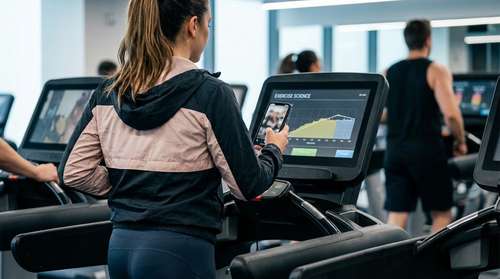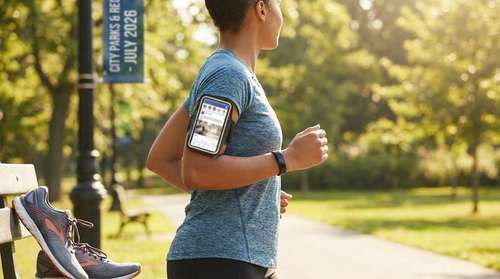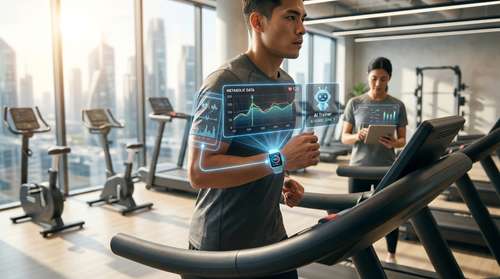
The era of checking your wrist merely to see if you hit 10,000 steps is officially over. Following record shipments of 178 million fitness trackers globally in 2025, the industry has crossed a massive technological threshold this year. We are witnessing the rise of the true AI personal trainer, a digital coach that processes your biological data in real time to dictate your daily workouts. As highlighted in the highly anticipated ACSM fitness survey 2026, wearable health technology has firmly secured its spot as the top industry driver, evolving from passive observation into active, prescriptive programming.
The Dawn of Prescriptive Programming in 2026 Fitness Trends
For years, the standard wearable provided a rearview mirror approach to health. It told you how far you ran or how poorly you slept the night before. Today's devices flip that dynamic entirely. The biggest shift in 2026 fitness trends is the leap toward predictive and prescriptive analytics. By synthesizing data from up to ten simultaneous sensors, these algorithms act as a 24/7 coach that adapts your routine on the fly.
Instead of a static workout plan that calls for heavy squats regardless of how your nervous system feels, a modern AI-driven wearable assesses your overnight heart rate variability, skin temperature, and respiratory rate. If you are under-recovered, the system actively modifies your scheduled high-intensity interval training into a low-impact mobility and Zone 2 cardio session. You receive real-time notifications mid-workout to speed up, slow down, or extend your rest periods based on your immediate physiological responses, fundamentally changing how we approach human performance.
Smartwatch Glucose Monitoring and the Metabolic Revolution
Perhaps the most groundbreaking advancement driving this shift is the integration of metabolic fitness tracking directly into consumer devices. The barrier between medical-grade diagnostic equipment and commercial fitness watches has practically vanished. In late March 2026, the discussion around smartwatch glucose monitoring reached a fever pitch. Major brands are now deploying advanced photonic crystal technology, utilizing specific light beams passing through the skin to measure glucose concentration in interstitial fluid with an impressive accuracy of ±10mg/dL.
While traditional continuous monitors remain critical for diabetic care, everyday athletes are rapidly adopting these non-invasive wrist wearables to optimize their fueling strategies. When your AI coach detects an unexpected dip in blood sugar during a long run, it sends a prompt to consume carbohydrates immediately, preventing a crash before it happens. This real-time visibility into how specific meals and exercises impact your unique metabolism allows for a level of dietary customization previously available only to elite Olympians.
Biosensors Beyond the Wrist: Fitness Longevity Tech
The wearable ecosystem has expanded significantly beyond basic heart rate tracking. Devices like the Samsung Galaxy Watch 7 have introduced medically-approved continuous blood pressure monitoring, while others evaluate blood oxygen (SpO2), perform on-the-go electrocardiograms, and assess body composition. This convergence of hardware forms the backbone of modern fitness longevity tech.
People are no longer exercising just to look good for the summer; they are training to extend their healthspan. The integration of continuous diagnostic data allows artificial intelligence to identify early warning signs of overtraining, chronic stress, or even hidden conditions like sleep apnea or atrial fibrillation. Modern wearables now process 8 to 10 sensors simultaneously to build an evolving digital health profile of the user.
Why the Digital Coach Excels
A human personal trainer typically sees you for a few hours a week. They rely on you accurately reporting your diet, sleep, and stress levels. An AI personal trainer, however, lives with you. It knows exactly how much deep sleep you achieved, whether your hydration levels are optimal, and how your cardiovascular system is recovering. This constant data stream removes the guesswork, ensuring that every drop of sweat yields the maximum physiological adaptation without risking injury.
Will the AI Personal Trainer Fully Replace Humans?
With the wearable market projected to exceed $95 billion by 2028, gym-goers naturally wonder if human coaches are becoming obsolete. The reality is more nuanced. While the micro-adjustments—telling you when to rest between sets or how to fuel your marathon—are increasingly outsourced to algorithms, human trainers are evolving.
Fitness professionals are shifting into roles more akin to macro-planners and behavioral psychologists. They help users interpret the massive wealth of data generated by their devices, focusing on form correction, motivation, and complex goal setting. The hardware handles the raw biology, while the human expert guides the mindset.
Ultimately, the wearables of 2026 represent a democratization of elite sports science. By turning vast amounts of metabolic data into clear, prescriptive actions, these smart devices guarantee that your fitness routine is exactly as dynamic and resilient as your own body.